Natural Stone Repair · Marble
Marble Restoration & Crack Repair
Structural lippage grinding, chip resin filling, acid etch removal, and stone surface rebuilding.
Read the guideService 01 · London
Honing, diamond polishing, and pH-neutral sealing for natural stone. Bespoke architectural stone restoration for Calacatta, Carrara, Nero Marquina, and travertine foyers, vanity tops, and reception halls.
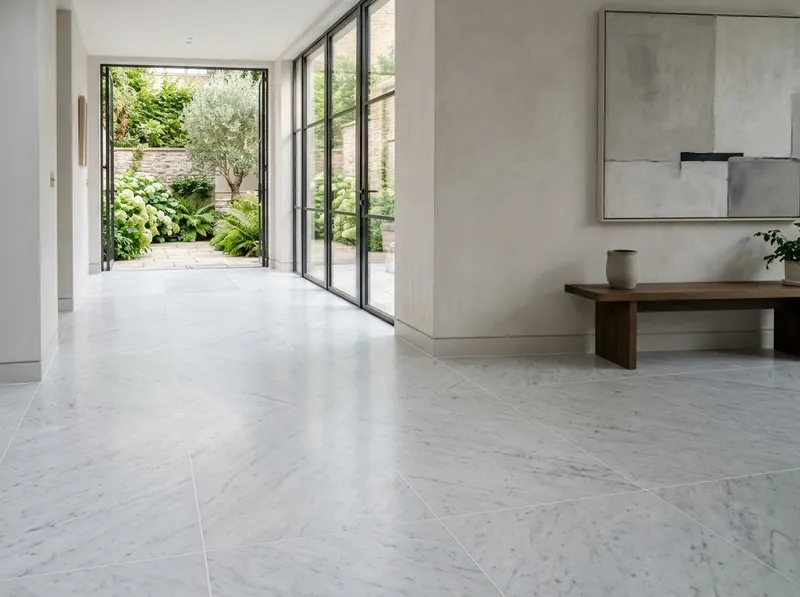
Acidic supermarket cleaners and abrasive pads permanently etch natural calcium stone. Our stone artisans restore mirror clarity or satin honed finishes using water-fed diamond resin discs and plant-derived sealants that let stone breathe.
Calacatta, Carrara, Statuario, and honed limestone floors absorb microscopic grit and liquid spills along their natural calcite veins. Rather than masking dullness with synthetic acrylic coatings that yellow and peel, we mechanically refine the stone face through progressive diamond grits before saturating the pores with a breathable, food- and pet-safe mineral impregnator.
Residential: Entrance halls, freestanding stone baths, kitchen islands, and hearth surrounds.
Commercial: Private gallery receptions, boutique hotel lobbies, and executive boardrooms.
Spot the problem early
Pale, matte marks where wine, citrus, vinegar or bathroom sprays have touched polished marble are acid etching. The stone itself has been dissolved at microscopic level, so wiping will never remove them. Honing is the cure.
Grit from shoes acts like fine sandpaper. Hallways and kitchen routes lose their reflective finish first, leaving a visible path in otherwise glossy stone.
Old floor polishes, acrylic sealers and wax build up in layers and trap dirt. They make marble look milky and can peel in patches.
Oil, cosmetics and moisture absorbed through unsealed pores show as grey or yellow stains. Cleaning the surface does not help unless the stain is drawn out and the stone is sealed.
Stair nosings, hearths, vanity edges and floor joints take knocks. Early repair with colour-matched resin stops moisture and dirt travelling underneath.
Rugs, furniture and sunlight create different levels of wear. A full-room hone brings the finish back to one consistent look.
Compare your options
| Treatment | What it does | Best for | Finish |
|---|---|---|---|
| Deep clean | Lifts dirt, grease and residue without changing the stone | Good-condition marble that looks tired | Same as before |
| Honing | Mechanically removes etching and light scratches with diamond pads | Etched, scuffed or dull floors and worktops | Matte to satin |
| Polishing | Continues through finer grits to bring back reflectivity | Highly polished Calacatta, Carrara and Statuario floors | High gloss |
| Sealing | Fills pores with a breathable impregnator to slow staining | Kitchens, bathrooms, hallways and tabletops | No visible change |
| Repair | Fills chips and cracks with colour-matched resin, then blends | Edges, stair nosings, cracked tiles | Blended to surrounding stone |
Method
We assess stone porosity, existing sealants, etch marks, and lippage to select either a mirror polish or matte architectural hone.
Botanical stone cleansers lift wax buildup, footwear carbon, and oils from natural fissures without etching calcium carbonate.
Progressive resin-bonded diamond abrasives erase acid rings, dull traffic lanes, and fine scratches in a dust-free wet slurry.
Low-VOC penetrating sealers shield marble vanities, hearths, and foyers against wine, coffee, and water staining while preserving natural texture.
We start by identifying the stone and checking its condition: hardness, existing sealers, chips, and any moisture or underfloor heating. A small test area shows how the stone responds before we commit to a method.
We then protect skirting, joinery, furniture and lift routes. Honing is done with water-fed diamond pads, so there is no airborne dust. The slurry is extracted as we work and the floor is rinsed and dried before the next grit is used.
Once the surface is even, we polish to your chosen finish and apply a breathable impregnating sealer. We finish with a walk-through, explain how to look after the stone and send aftercare notes.
Specialist pages
Each specialist page covers the problems we solve, the finishes we treat and aftercare advice.
Natural Stone Repair · Marble
Structural lippage grinding, chip resin filling, acid etch removal, and stone surface rebuilding.
Read the guideNatural Stone Care · Marble
Optical diamond polishing and satin architectural honing with zero artificial plastic gloss.
Read the guideNatural Stone Repair · Limestone
Gentle pore extraction, honing, and matte sealing for Portland, Jura, and French limestone.
Read the guideNatural Stone Repair · Travertine
Deep pore soil extraction, cavity resin filling, honing, and water-repellent sealing.
Read the guideNatural Stone Repair · Granite & Terrazzo
Poured terrazzo restoration, granite worktop repolishing, and natural slate colour enrichment.
Read the guideNatural Stone Repair · Exotic Stone
Delicate restoration for backlit onyx, Taj Mahal quartzite, basalt, and interior sandstone.
Read the guidePricing & quotes
We quote in writing and do not use a one-size-fits-all rate, because two marble floors of the same size can need very different amounts of work. The main factors are:
The fastest route to an accurate quote is to send photos of the whole room and a close-up of the worst area on WhatsApp.
Dust or soft-mop with a clean, damp microfibre cloth. Blot spills straight away.
Clean with a pH-neutral stone soap, then dry. Avoid vinegar, bleach and bathroom sprays.
Professional deep clean, with re-sealing in kitchens and wet rooms. Heavily trafficked floors may benefit from light re-honing.
Areas we cover
We provide marble cleaning & restoration in the districts below. Choose your area for local property notes, access guidance and the other services we offer there.
Straight answers
Cleaning lifts dirt and residue without changing the stone. Honing mechanically refines the surface with diamond pads to a matte or satin finish, and polishing continues to finer grits to create a reflective finish. Etch marks are physical damage, so they need honing or polishing, not just cleaning.
Price depends on floor area, stone type, condition, finish (satin or mirror) and any chip or crack repair. We give free written quotes from photos or a site visit rather than a generic per-square-metre figure that would not reflect your stone.
Marble is mostly calcium carbonate, which reacts with acids in lemon juice, wine, vinegar and many bathroom cleaners. The reaction dissolves a microscopic layer of polished stone, leaving a dull, chalky patch.
Busy hallways and kitchens often benefit from re-honing and sealing every few years, depending on traffic and care. Sealing reduces staining but does not stop acid etching, so correct daily cleaning matters.
Yes. We use pH-neutral, plant-derived cleaners and low-VOC breathable sealers, and we provide aftercare guidance once the work is complete.
In most cases, yes. Etching and scratches sit in the top layer of the stone, so honing with diamond abrasives removes them. Very deep damage, cracks and missing pieces are repaired separately, and we tell you before we start if the stone is too thin or damaged for full restoration.
Yes, provided the heating is switched off before and during the work so the stone is at a stable temperature. We confirm this with you in advance.
Polishing changes how the surface looks and reflects light. Sealing changes how the stone absorbs liquids. A polished floor can still stain if it is not sealed, and a sealed floor can still etch if it meets acid.
Yes. We can finish stone in a honed, satin or high-polish look. Show us a photo of the finish you prefer and we will advise which pad sequence gets closest.
Keep exploring
Useful external resources: Stone Federation Great Britain · Mohs scale of mineral hardness (Wikipedia)
24/7 London dispatch desk
Share photographs of marble etching, darkened grout lines, carpet staining, or urgent water ingress on WhatsApp for a fast specification and free quote.